From August 5 to 7, the 12th IEEE International Conference on Cybernetics and Intelligent Systems and the 12th IEEE International Conference on Robotics, Automation and Mechatronics (The 12th IEEE International Conference on Cybernetics and Intelligent Systems & Robotics, Automation and Mechatronics, IEEE CIS-RAM 2026) was held in Changchun. The conference was jointly organized by IEEE, the IEEE Singapore Section, the IEEE Harbin Section, the IEEE RAS Singapore Chapter, the IEEE SMC Singapore Chapter, the IEEE RAS Guangzhou Chapter and Jilin University; co-organized by Changchun University of Technology and Amity University; and supported by the School of Artificial Intelligence of Jilin University, the College of Communication Engineering of Jilin University, the Technical Committee on Coexisting-Cooperative-Cognitive Robotics of the Chinese Association of Automation, the Technical Committee on Intelligent Robotics of the China Computer Federation, and the journalIntelligence & Robotics. Experts and scholars from universities, research institutions and industry around the world gathered in Changchun for in-depth exchanges on frontier topics including embodied AI, robotics, autonomous systems and intelligent control.
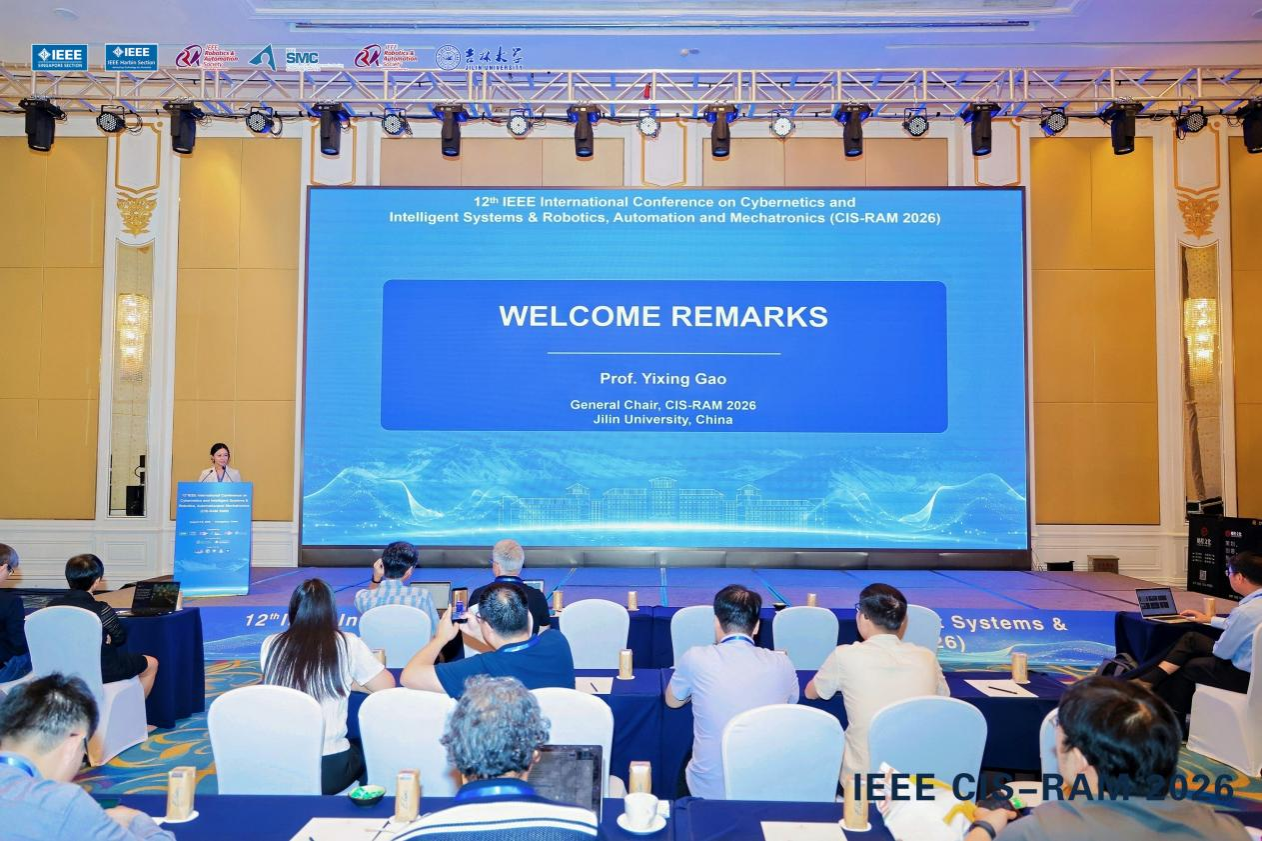
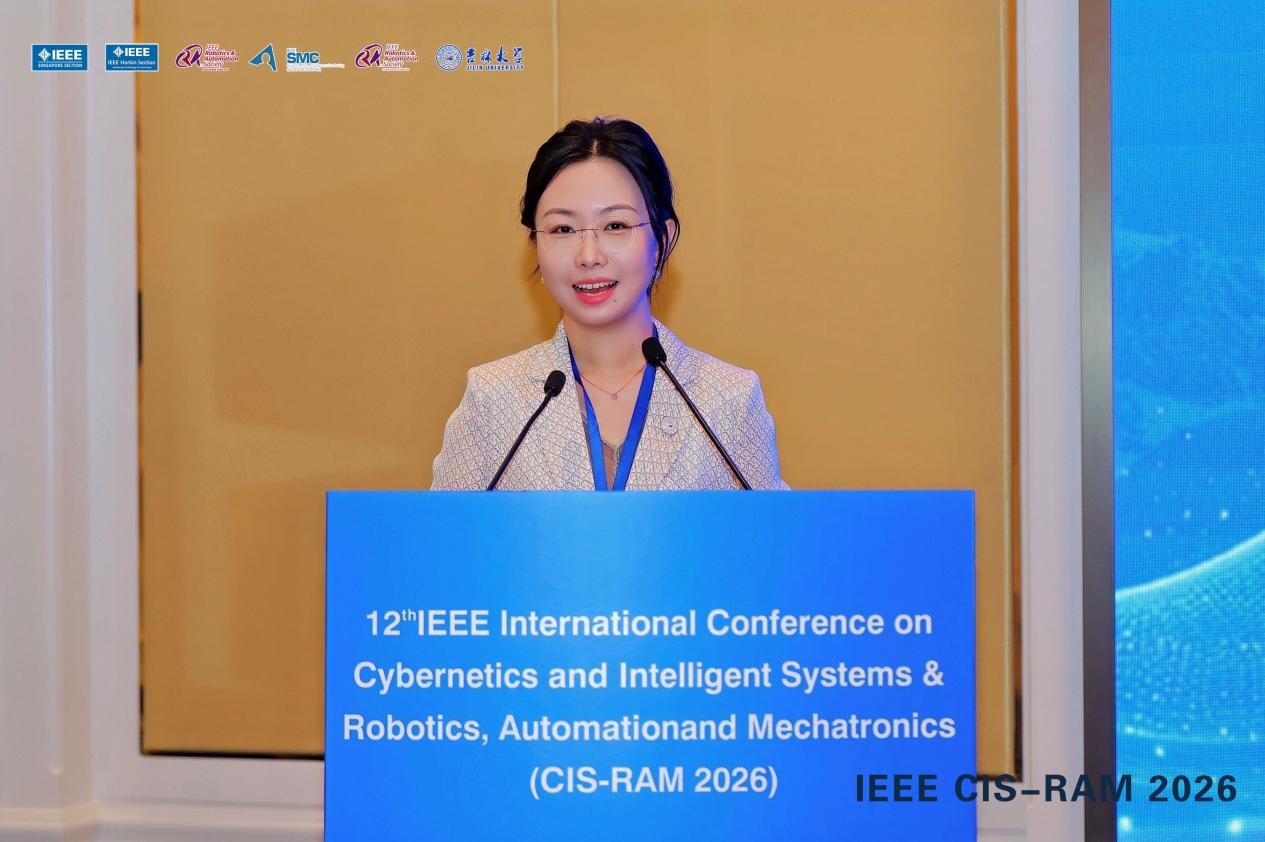
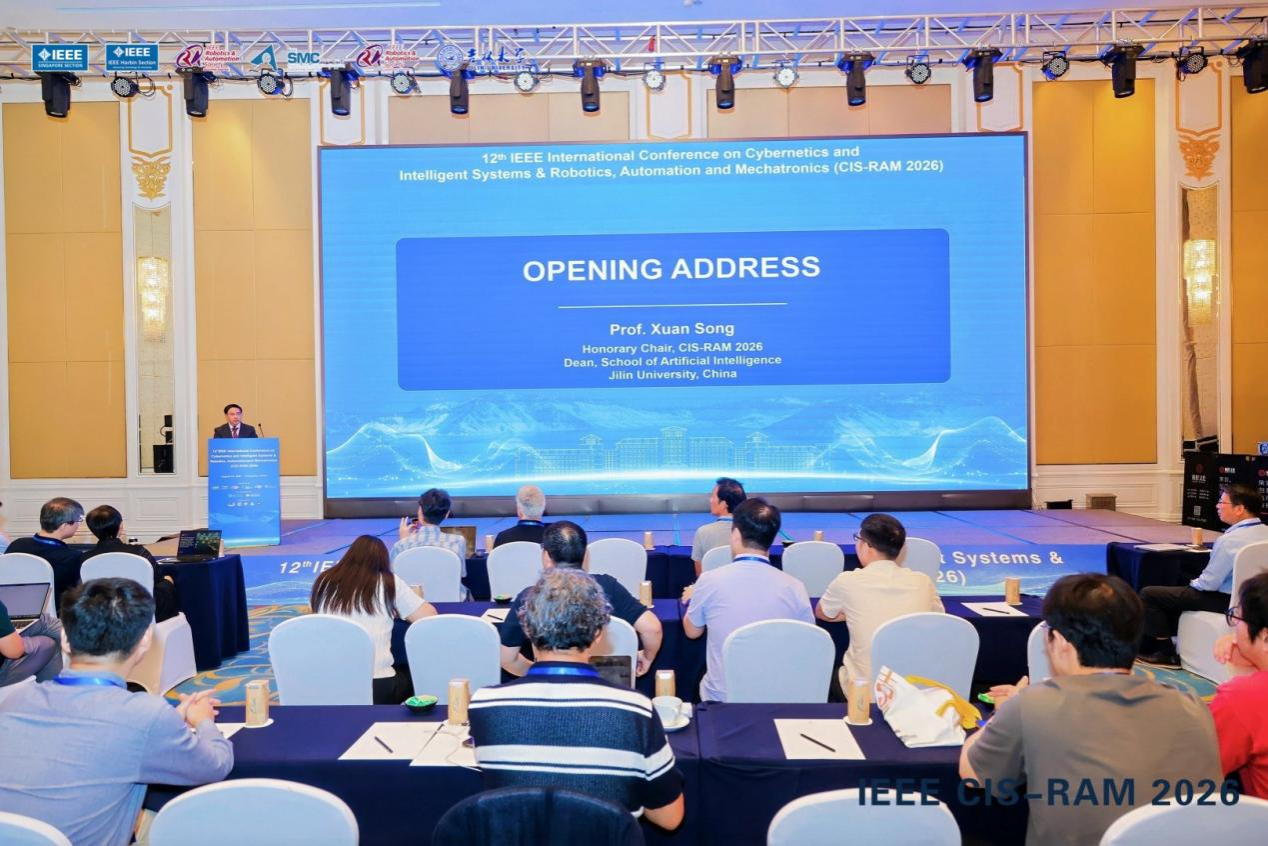
Prof. Xuan Song, Dean of the School of Artificial Intelligence at Jilin University, and Mr. Ashok Chauhan, Founder President of Amity University, served as Honorary Chairs. Assoc. Prof. Yixing Gao of Jilin University, Prof. Guoqiang Hu of Nanyang Technological University, Singapore, Prof. Gurinder Singh of Amity University and Dr. Yan Wu of the Agency for Science, Technology and Research (A*STAR), Singapore, served as Conference Chairs. Research Fellow Hechang Chen, Vice Dean of the School of Artificial Intelligence at Jilin University, and others served as Program Committee Chairs. The opening ceremony was chaired by Conference Chair Yixing Gao, who declared the conference open. Dean Xuan Song then delivered a welcome address, extending a warm welcome to the participating experts and scholars on behalf of Jilin University and expressing his hope that the conference would serve as an opportunity to further deepen academic exchange and collaboration.
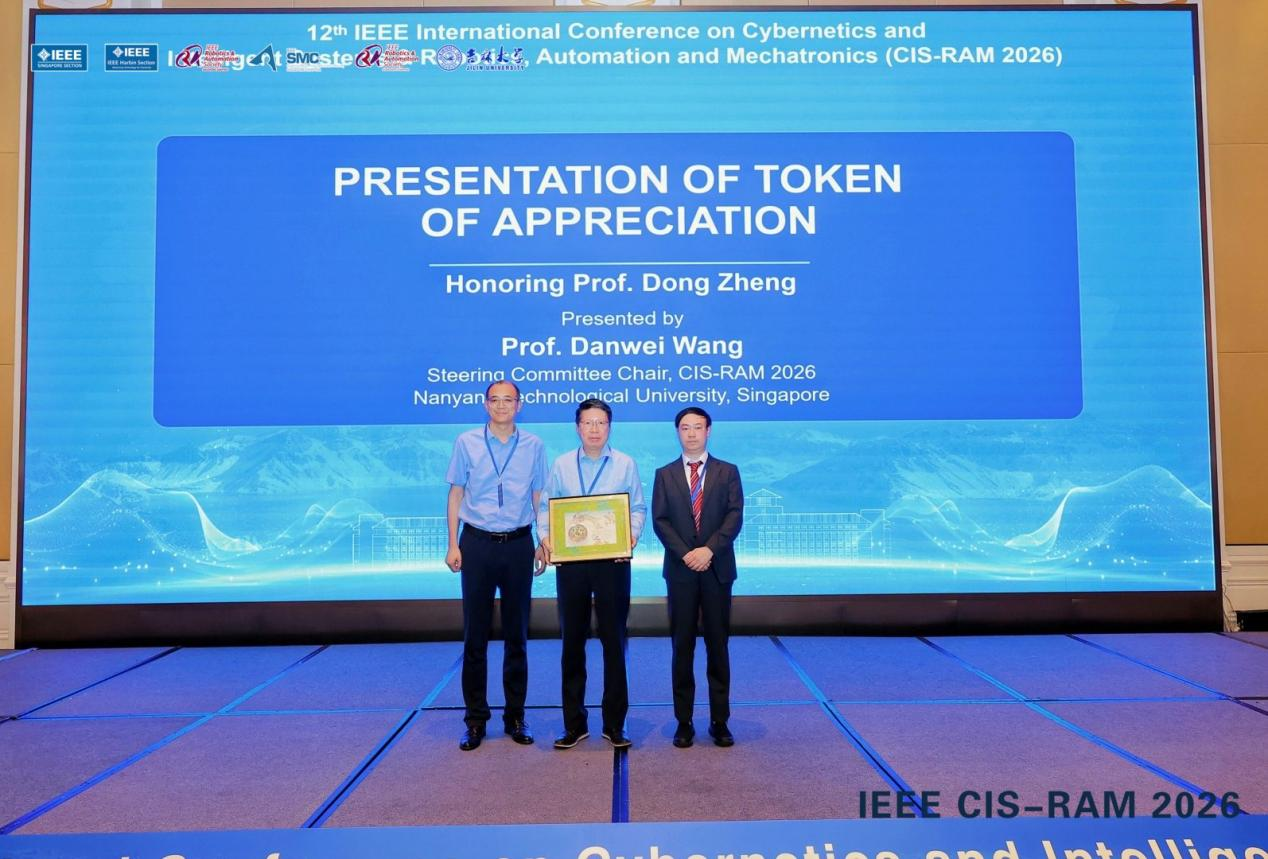
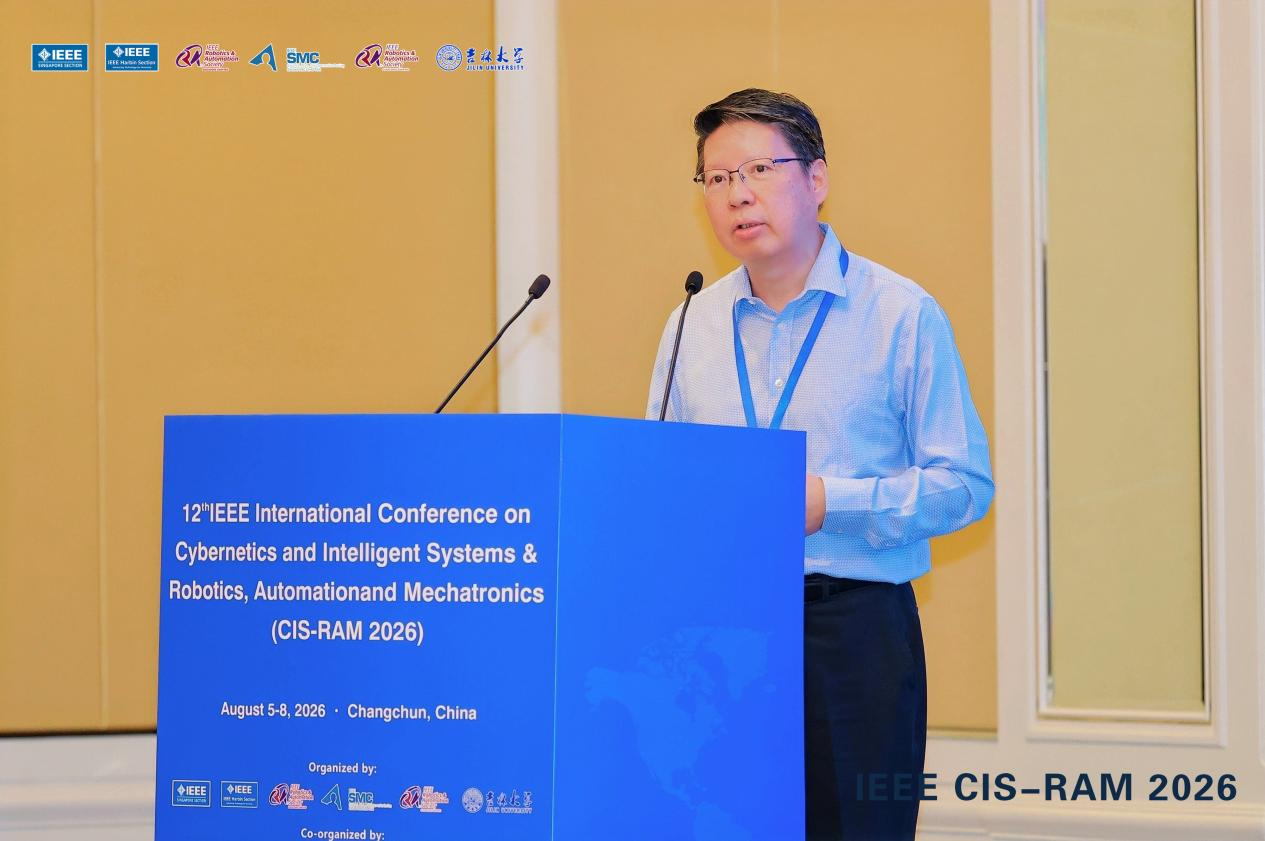
Following the welcome address, Prof. Danwei Wang, Chair of the CIS-RAM 2026 Steering Committee, Fellow of the Academy of Engineering, Singapore, and Professor at Nanyang Technological University, presented a commemorative gift to Jilin University, the host institution. The gift was received on behalf of Jilin University by Dong Zheng, Secretary of the Party Committee of the School of Artificial Intelligence, and Dean Xuan Song.
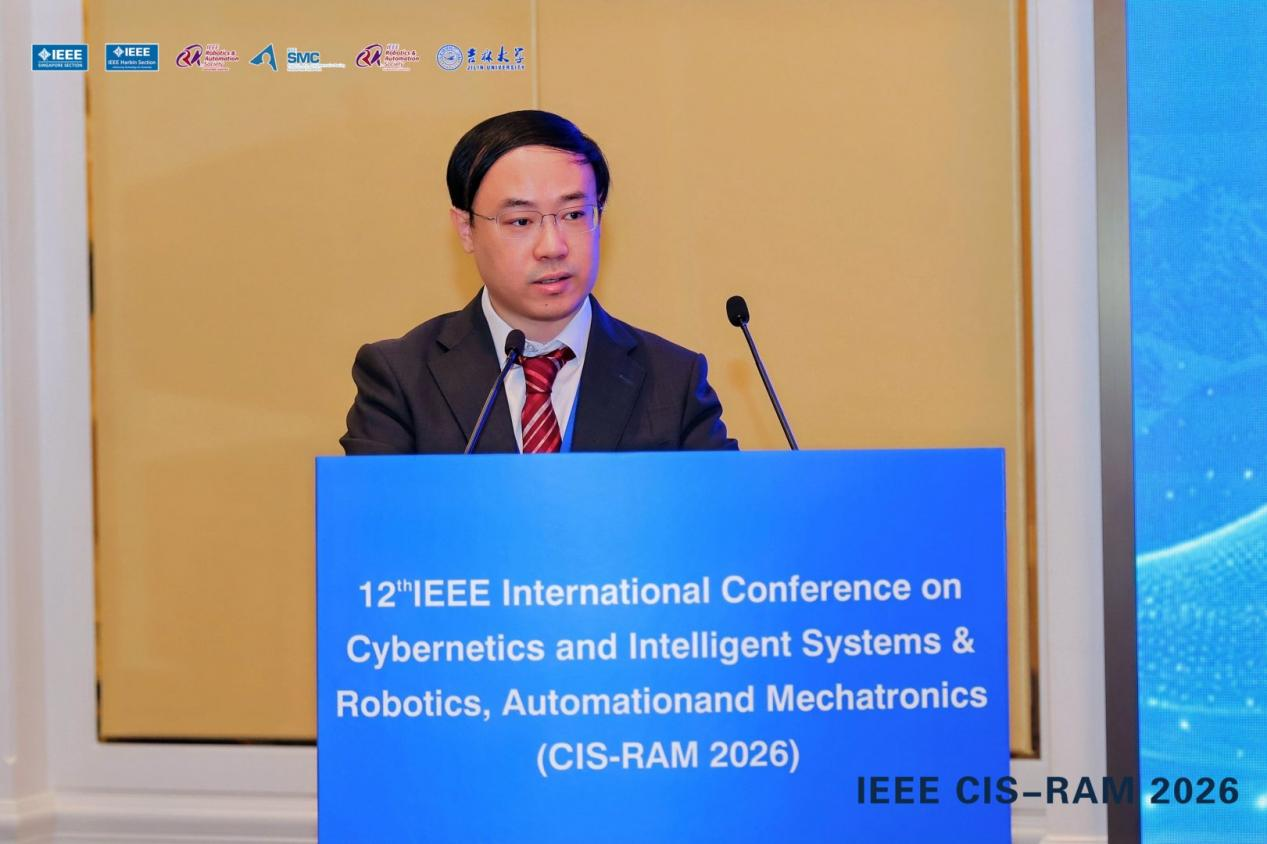
During the conference, three experts delivered keynote speeches on frontier issues in intelligent systems and robotics.
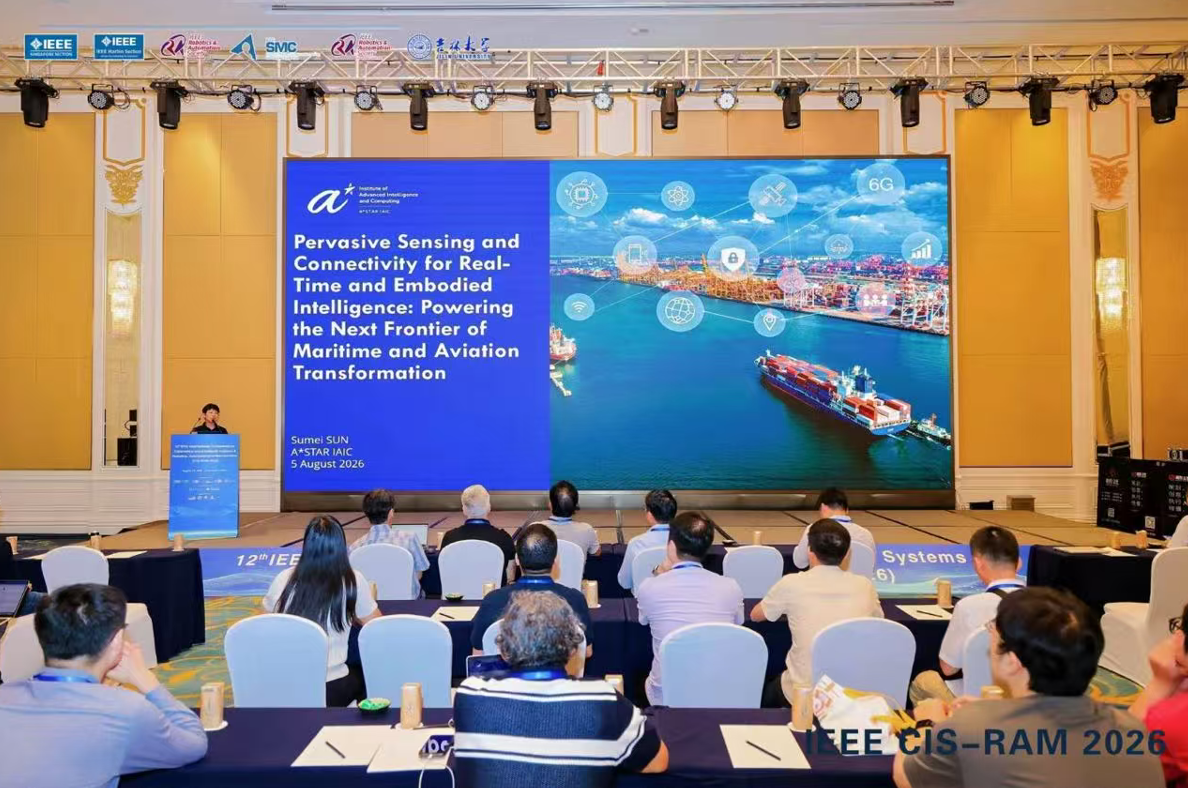
Prof. Sumei Sun, Fellow of the Academy of Engineering, Singapore, of the Agency for Science, Technology and Research (A*STAR), delivered a keynote titledPervasive Sensing and Connectivity for Real-Time and Embodied Intelligence: Powering the Next Frontier of Maritime and Aviation Transformation. She discussed pervasive sensing, 6G integrated satellite-terrestrial networks, sensing technologies and their applications in embodied intelligence, with a particular focus on the application of these technologies in the maritime and aviation sectors.
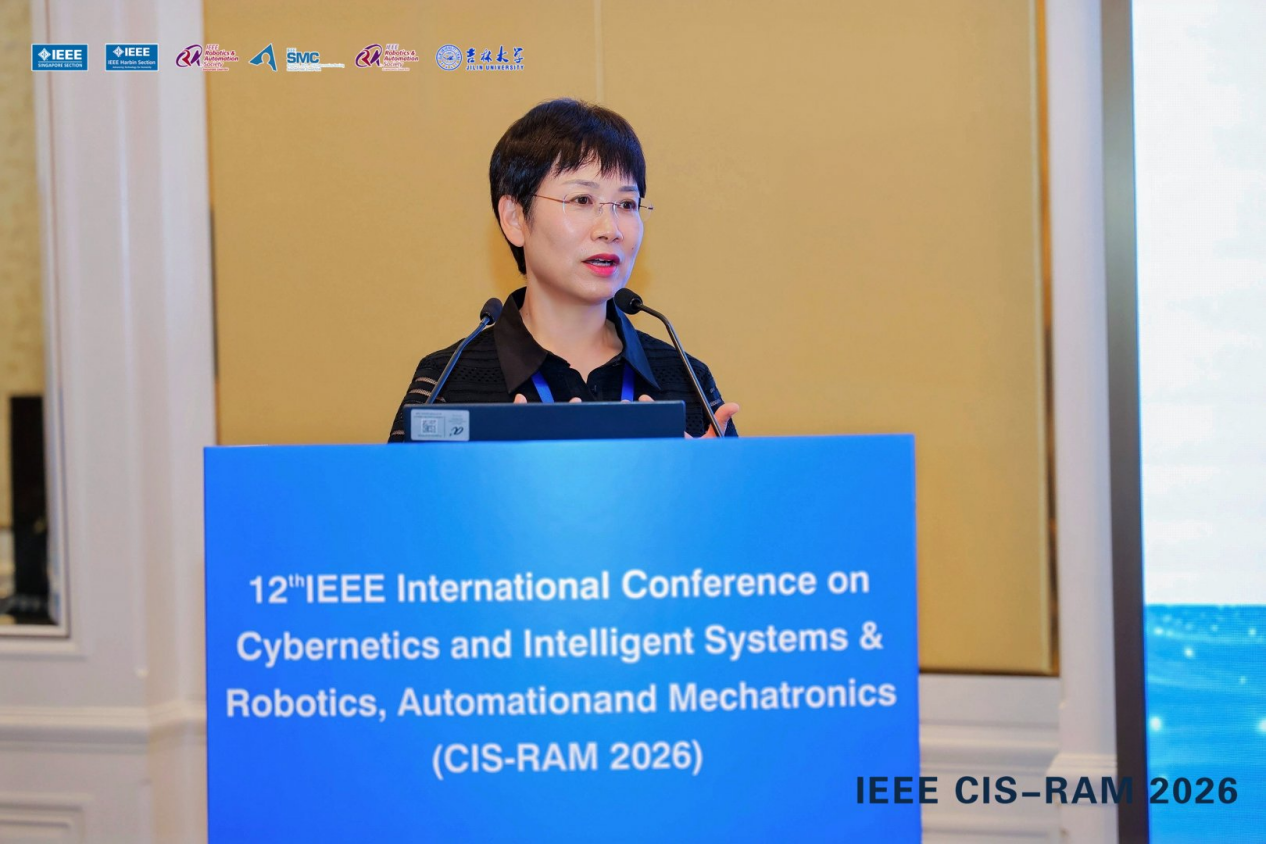
Prof. Yiannis Demiris, Royal Academy of Engineering Chair Professor at Imperial College London, delivered a keynote titledPersonal Assistive Robotics, addressing multimodal perception, user modeling, behavior adaptation and human-robot trust in assistive robotics. He focused on how robots perceive and predict human states and behaviors, and dynamically adjust both the mode and the level of assistance according to user needs. The talk also introduced applications of these technologies in everyday scenarios such as smart wheelchairs, robot-assisted dressing, assisted feeding, cooking and personal care.
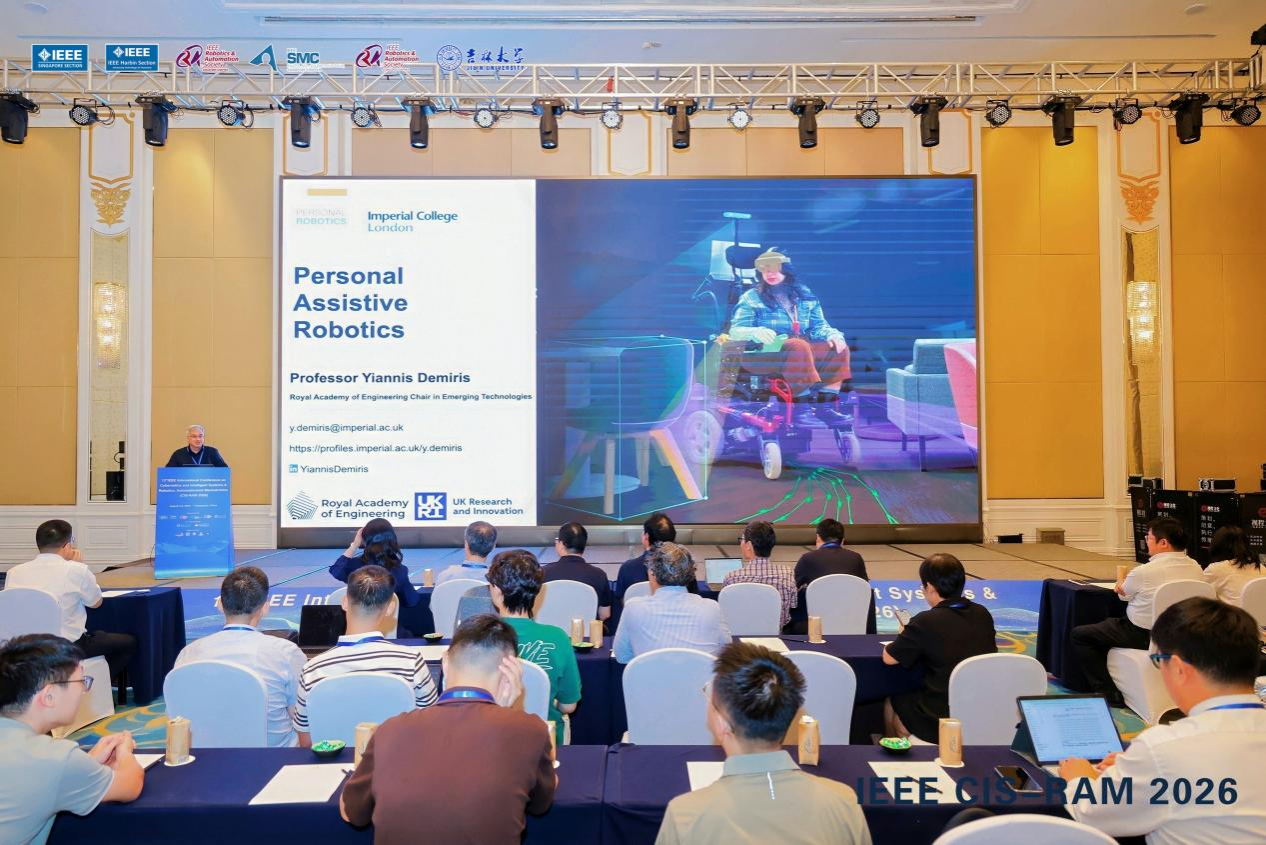
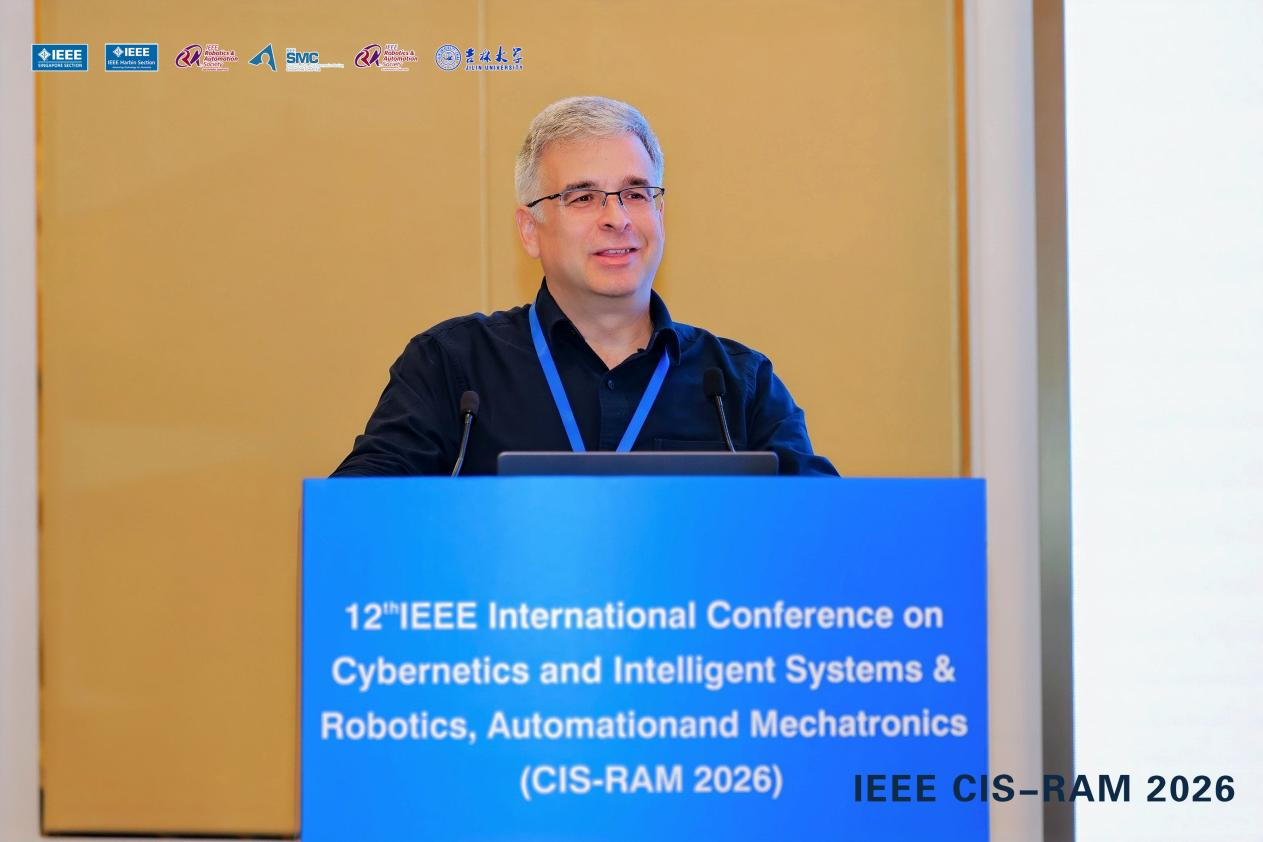
Prof. Fuchun Sun of Tsinghua University delivered a keynote titledTactile VLA with Built-in Physics for Robotic Operations. He presented an approach that integrates tactile perception, physical knowledge and vision-language-action (VLA) models, and discussed the application of a physics-informed tactile VLA framework in precision robotic manipulation and fabric manipulation.
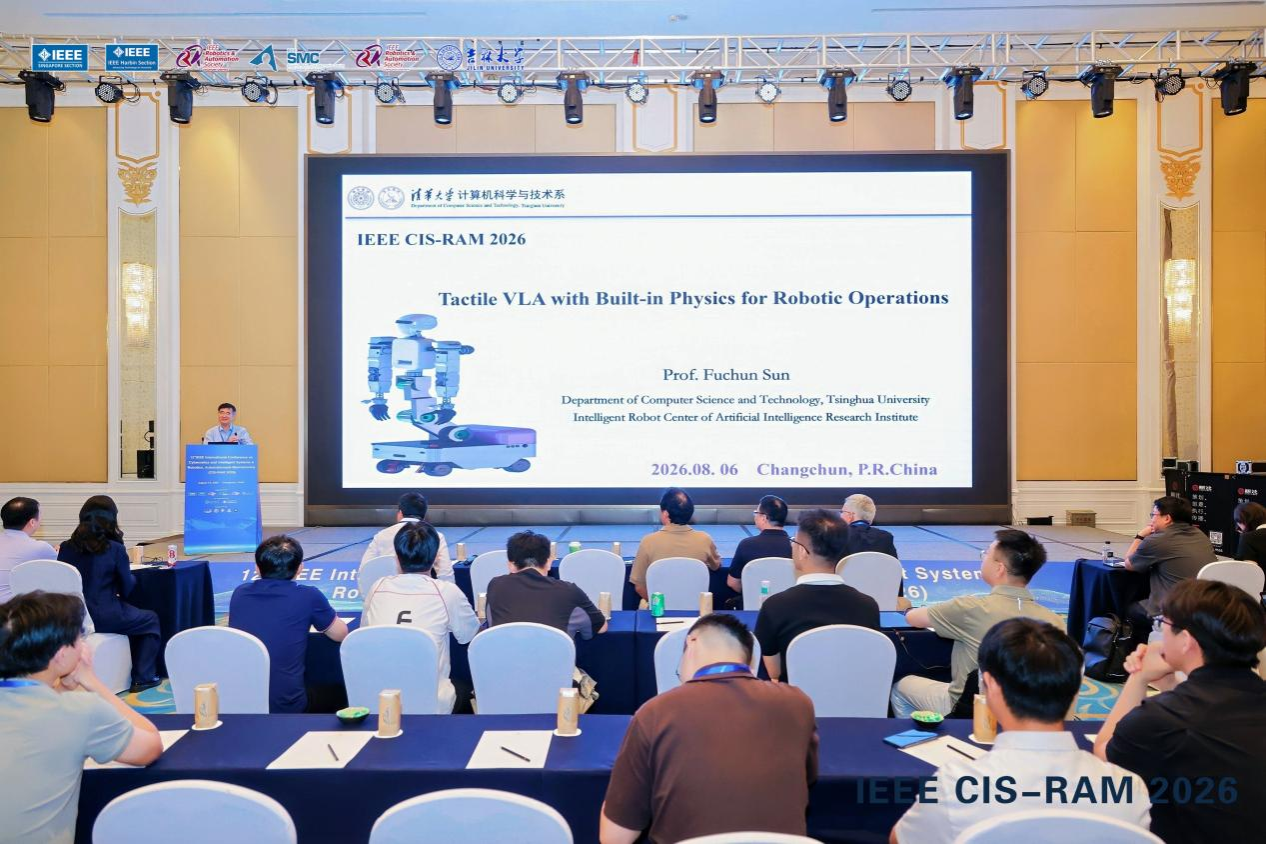
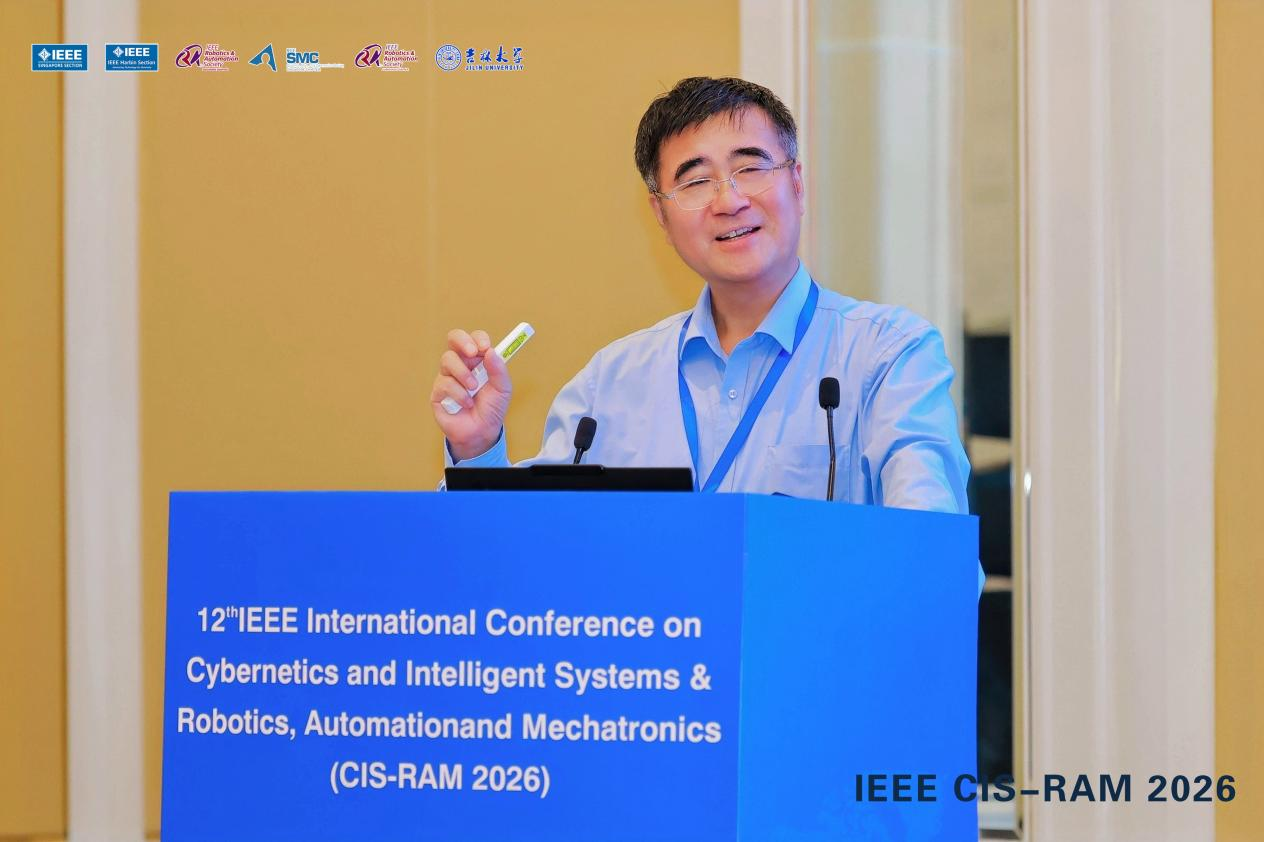
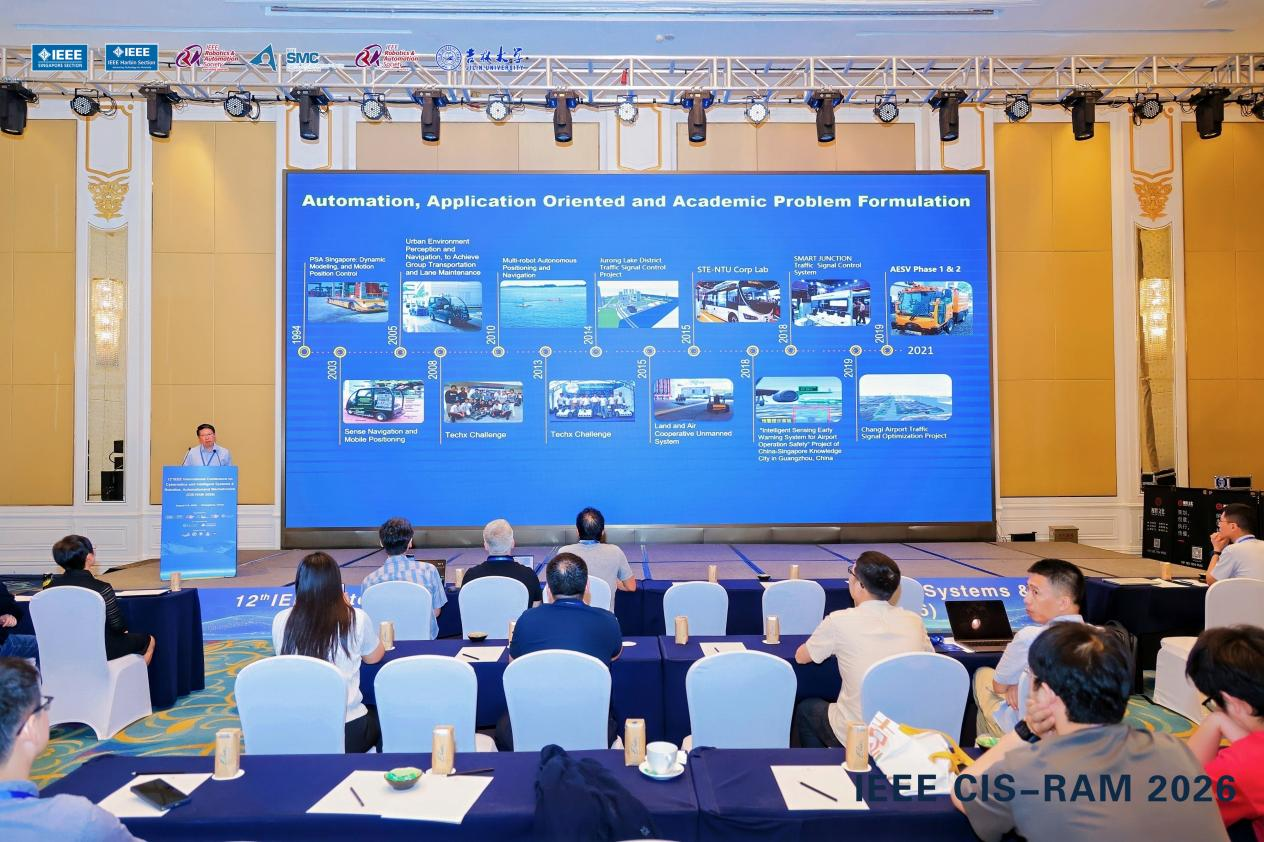
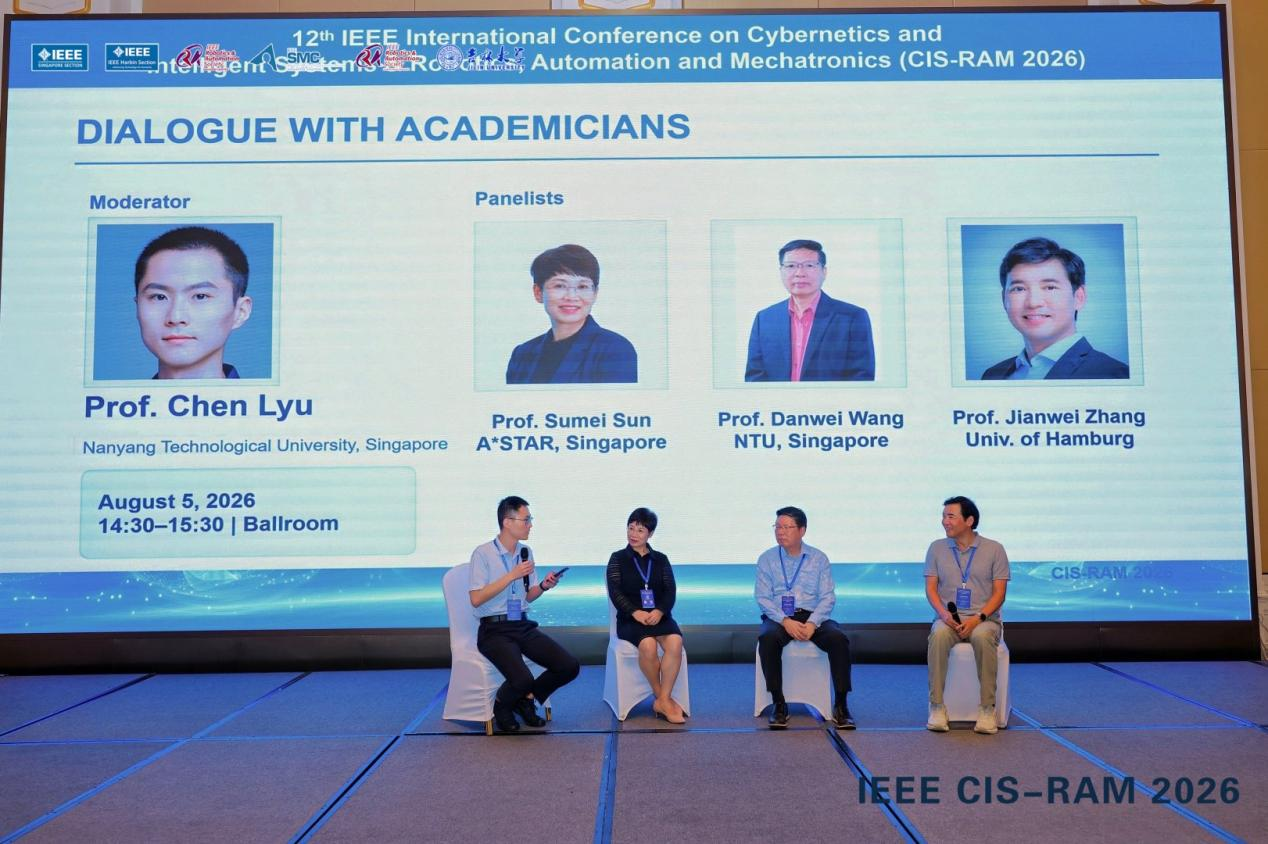
In the "Dialogue with Academicians" session, Prof. Danwei Wang, Chair of the CIS-RAM 2026 Steering Committee, Fellow of the Academy of Engineering, Singapore, and Professor at Nanyang Technological University, first shared his research and reflections on digital artificial intelligence and unmanned systems. Subsequently, in a session moderated by Prof. Chen Lv of Nanyang Technological University, Prof. Danwei Wang, Prof. Sumei Sun and Prof. Jianwei Zhang — Foreign Member of the Chinese Academy of Engineering, Member of the German National Academy of Science and Engineering (acatech), Member of the Hamburg Academy of Sciences, and Professor at the University of Hamburg — exchanged views on development trends, frontier challenges and future opportunities in artificial intelligence, intelligent systems and robotics.
Focusing on these frontier directions, the conference featured 20 technical sessions, comprising 16 on-site sessions and 4 online sessions, with a total of 93 paper presentations. Topics covered embodied AI, robot learning and control, embodied perception and navigation, intelligent transportation, autonomous systems, and deep learning for robotic systems, among others. The conference also hosted industry talks, corporate exhibitions and robotics demonstrations, fostering exchanges on the industrial landscape of embodied AI, robotic systems and related technology applications, and further strengthening the interaction between academic research and industrial practice.
A Best Paper Awards Ceremony was held during the conference. Four awards — the Best Paper Award, Best Student Paper Award, Best Scaling-Up Paper Award and Best Open Impact Paper Award — were presented in recognition of outstanding research achievements.